If you were injured by a federal employee in New Mexico — a USPS driver who rear-ended your car, a Veterans Affairs physician who missed a diagnosis, a Bureau of Indian Affairs vehicle that ran a stop sign on Tribal land, an Indian Health Service provider whose negligence caused harm, or a federal contractor working on military property — you can sue. But the rules are not the rules that govern an ordinary New Mexico personal injury case. Federal claims are governed by the Federal Tort Claims Act (FTCA), and they have their own deadlines, their own procedures, and their own pitfalls.
How long do I have to file a Federal Tort Claims Act claim?
Under the Federal Tort Claims Act, you must file an administrative claim with the responsible federal agency within two years of the injury — not New Mexico’s three-year deadline. This applies to claims involving federal employees and agencies such as the VA, IHS, NPS, and USPS. Missing the two-year deadline usually bars the claim.
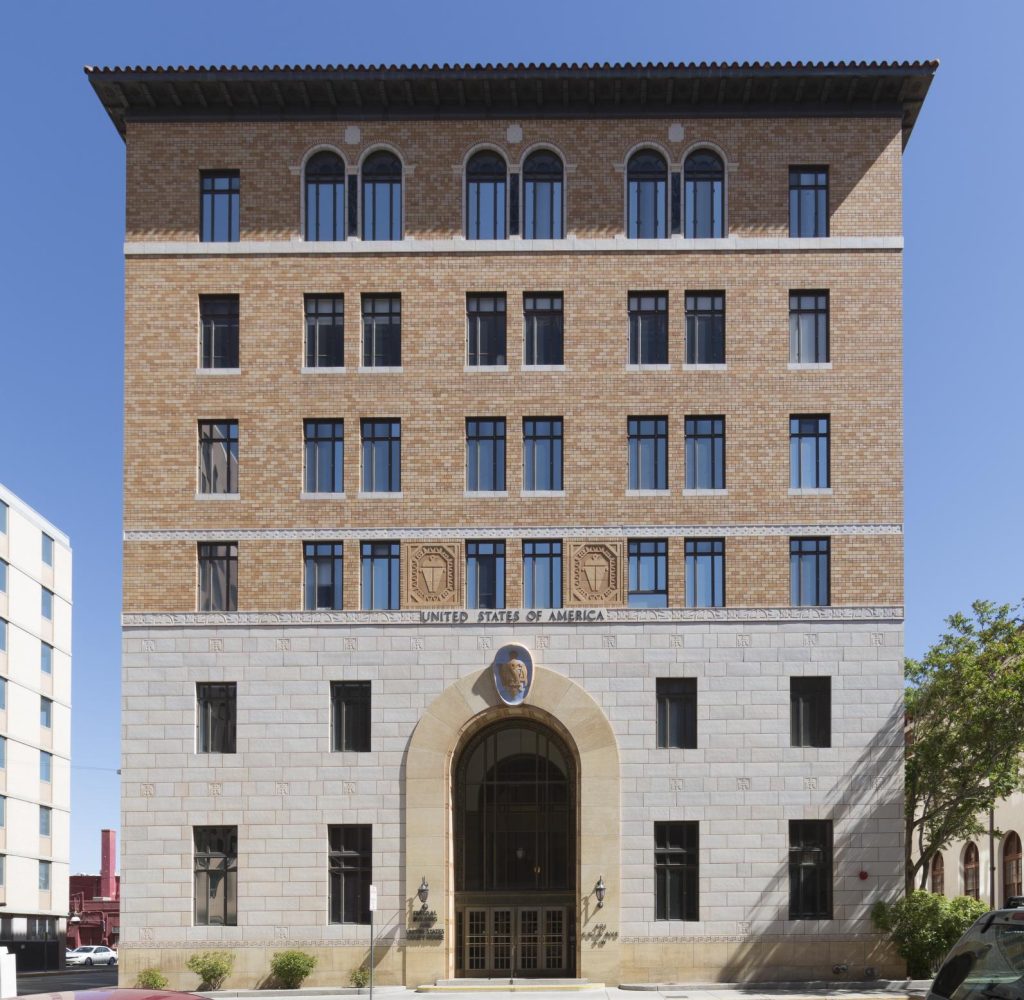
I’m Alex Flores, Senior Counsel at Singleton Schreiber. Before joining the firm, I served as a Supervisory Assistant U.S. Attorney with the U.S. Department of Justice in Albuquerque. I co-led the Indian Country Crimes Section, personally prosecuted nearly 200 federal felony cases, and tried 17 federal jury trials — all in the federal courthouse where FTCA cases are filed. I left the Department of Justice to bring that federal-court experience to people on the other side of the courtroom: New Mexicans whose lives were upended by the negligence of the federal government and the entities and contractors that operate on its behalf.
Call (505) 587-3473 — Free Case Review Request Consultation
Why You Need a Lawyer Who Knows Federal Court
Federal Tort Claims Act practice is its own world: the administrative claim process, U.S. magistrate judges, depositions of federal employees under agency regulations. It is a distinct skill set — and it is a core part of my practice.
The most common — and most devastating — mistake in FTCA cases is missing the Standard Form 95 deadline. Before you can sue the United States in federal court, you must first file a sworn administrative claim with the federal agency whose employee caused your harm. You have two years from the date of the injury to file that claim. If you miss it, you cannot sue. There is almost no relief from this deadline, and the limited equitable exceptions that do exist are rarely granted.
The federal landscape in New Mexico is unusually broad. We have four major military installations, two of the country’s premier national laboratories, a Veterans Affairs hospital and clinic system that serves the entire state, an Indian Health Service network that delivers care across multiple Pueblos and the Navajo Nation, and a Bureau of Indian Affairs road system covering thousands of miles of Tribal lands. Each of those federal footprints generates injury claims every year — claims that follow a specialized federal process with unforgiving deadlines.
The Federal Footprint in New Mexico
To understand why FTCA matters in New Mexico, look at the map. Federal land, federal facilities, and federal employees touch nearly every corner of this state. Each is a potential source of injury, and each is governed by federal law if a federal employee or instrumentality caused harm.
Military installations
- Kirtland Air Force Base (Albuquerque) — One of the largest air bases in the U.S. by land area. Off-base motor vehicle accidents involving on-duty Kirtland personnel are FTCA matters. So are injuries on the installation itself caused by negligent base operations.
- Holloman Air Force Base (Alamogordo) — F-16 training base. On-duty traffic, base medical malpractice, and contractor negligence claims are all in scope.
- Cannon Air Force Base (Clovis) — Air Force Special Operations Command. Same FTCA framework applies.
- White Sands Missile Range (Las Cruces / Tularosa Basin) — Massive Army installation. Federal contractor negligence and on-duty federal employee claims arise frequently.
National laboratories
- Sandia National Laboratories (Albuquerque) — Operated by NTESS for the National Nuclear Security Administration.
- Los Alamos National Laboratory (Los Alamos) — Operated by Triad National Security for the NNSA.
Both labs employ thousands of workers, but FTCA claims lie only where the negligent actor was a federal employee — most lab personnel work for the operating contractors, and claims against contractors proceed under state law instead. Off-site vehicle accidents involving on-duty lab employees, for example, fall under federal jurisdiction.
Veterans Affairs medical care
The Raymond G. Murphy VA Medical Center in Albuquerque, the New Mexico VA Health Care System’s network of community-based outpatient clinics across the state (Santa Fe, Las Cruces, Farmington, Raton, Silver City, Truth or Consequences, Artesia, Clovis, and elsewhere), and Vet Centers throughout New Mexico all employ federal physicians, nurses, and clinicians whose negligence is governed by the FTCA. VA medical malpractice cases are some of the most procedurally distinct cases I handle — they require an administrative claim with the VA, specific damages documentation, and often expert testimony from physicians familiar with VA standards of care.
Indian Health Service
IHS operates clinics and hospitals serving the 23 Tribal Nations of New Mexico — including the Albuquerque Indian Health Center, the Santa Fe Indian Hospital, the Acoma-Cañoncito-Laguna Service Unit, the Mescalero Service Unit, and the Northern Navajo Medical Center in Shiprock, among others. Negligent care by IHS employees is governed by the FTCA. So is negligence by federally-credentialed providers under the Indian Self-Determination and Education Assistance Act (ISDEAA), which extends FTCA coverage to many tribally-operated 638-program facilities. IHS and 638-clinic malpractice cases are a meaningful share of my federal practice.
Bureau of Indian Affairs roads and operations
BIA maintains thousands of miles of roads across New Mexico’s reservations and pueblos. When a BIA vehicle causes a crash, when a BIA-maintained road is dangerously defective, or when a BIA officer’s conduct injures someone, the claim is governed by the FTCA. Many of these cases also involve overlapping Tribal court jurisdiction — and figuring out which forum applies is the kind of analysis most NM personal injury lawyers don’t do.
Commercial truck crashes on BIA and Navajo Nation roads around Farmington often carry an FTCA claim alongside the trucking claim; the Farmington truck accident page explains how the two fit together. The same question comes up on US-84/285 through the Pueblos north of Santa Fe, covered on the Santa Fe truck accident page.
U.S. Postal Service
USPS operates one of the largest motor vehicle fleets in the country. In rural New Mexico, USPS contract carriers drive long routes daily across hundreds of miles of state and federal highways. When a USPS driver — whether a career letter carrier or a contract Highway Contract Route driver — causes a crash, the FTCA generally governs the claim against the federal driver. USPS vehicle accidents are among the most common FTCA matters statewide.
Federal land management agencies
The U.S. Forest Service (Cibola, Carson, Gila, Lincoln, and Santa Fe National Forests), the National Park Service (Carlsbad Caverns, Chaco, White Sands, Bandelier, Petroglyph), the Bureau of Land Management (which manages roughly a quarter of all New Mexico land), and the Bureau of Reclamation all employ federal personnel whose conduct can give rise to FTCA claims — from negligent vehicle operation to negligent maintenance of federal facilities.
How the FTCA Works — and How It’s Different
The FTCA is the federal statute that lets injured people sue the United States for money damages caused by the negligence of federal employees acting within the scope of their employment. Without the FTCA, the United States enjoys sovereign immunity — the centuries-old legal doctrine that the government cannot be sued without its consent. The FTCA is that consent, but it is consent on the federal government’s terms. It comes with hard rules.
1. The administrative claim is mandatory
You cannot file an FTCA lawsuit until you have first filed a written administrative claim with the federal agency whose employee caused the harm. The standard vehicle is Standard Form 95. The claim must:
- State a “sum certain” — a specific dollar amount you are seeking. (Underestimating here can permanently cap your recovery. Overestimating doesn’t help either.)
- Be filed within two years of the date the claim accrued (typically the date of injury, sometimes the date of discovery for delayed-presentation injuries like missed cancer diagnoses).
- Be sent to the correct federal agency — a misdirected claim must be transferred, but it counts as presented only when the right agency receives it, so a mistake near the two-year deadline can still be fatal.
- Include enough factual detail to put the agency on notice of the claim.
2. The agency has six months to respond
Once you file the claim, the agency has six months to either (a) deny it, (b) settle it, or (c) say nothing. If the agency denies the claim or fails to act for six months, you can then file a federal lawsuit in the U.S. District Court for the District of New Mexico — and you have six months from the denial to do so.
3. No jury, no punitive damages, limited interest
FTCA cases are tried to the bench — there is no jury. Punitive damages are not available. Pre-judgment interest is generally not recoverable. Damages are governed by New Mexico substantive law, which means New Mexico’s pure comparative fault rule applies and most damages categories (medical bills, lost earnings, pain and suffering, loss of enjoyment of life, loss of consortium) are recoverable.
4. Discretionary function and intentional tort exclusions
The FTCA does not cover every wrong by every federal employee. Two big exclusions: the discretionary function exception bars claims arising from policy-level federal decisions (rather than operational negligence), and the intentional tort exception bars most claims for assault, battery, false imprisonment, and similar intentional harms — except when committed by federal law enforcement officers, who are exempt from this exclusion. Whether a particular claim falls inside or outside these exclusions is the kind of legal question that decides whether you have a case at all.
The New Mexico Tort Claims Act — When the Defendant is a State or Local Entity
If your injury was caused by a state, county, or municipal employee in New Mexico — a city of Albuquerque police officer, a state highway department crew, a county sheriff’s deputy, a public school employee — your claim is governed not by the FTCA but by the New Mexico Tort Claims Act. The procedural rules are different and, in some ways, even less forgiving.
- Written notice within 90 days. NMSA § 41-4-16 requires that you give written notice of your claim to the relevant governmental entity within 90 days of the injury — and six months for wrongful-death claims brought by the personal representative. There is no good-cause extension; the period tolls during incapacity, and a narrow actual-notice exception exists, but do not rely on either. Miss the deadline, and your claim is barred — even though the underlying statute of limitations is two years.
- Two-year statute of limitations. NMSA § 41-4-15 gives you two years from the date of the injury to file suit (or from the date of death in wrongful death cases).
- Damages caps. The NMTCA caps damages: $300,000 per occurrence for all past and future medical and medically related expenses, $400,000 per person for all other damages, and $750,000 aggregate per occurrence (exclusive of medical and property damage) — with no punitive damages or pre-judgment interest.
- Specific waivers of immunity only. The NMTCA waives immunity only for specifically enumerated kinds of claims (motor vehicle, premises, medical malpractice by health care providers, law enforcement officer torts, etc.). Claims that don’t fit a waiver are barred.
Many of my clients have a claim that turns out to involve both federal and state actors — a federal officer riding with a state task force, a USPS driver who hit a city of Albuquerque worker, a VA hospital that contracted with a private clinic. Sorting out which sovereign owes what, under which statute, is part of the front-end work that determines whether the case can be won.
Common FTCA Cases I Handle in New Mexico
- USPS vehicle collisions — letter carrier and Highway Contract Route driver crashes, statewide.
- Veterans Affairs medical malpractice — surgical errors, missed diagnoses, medication errors, failure to monitor, negligent psychiatric care.
- Indian Health Service medical malpractice — including 638-program Tribal facility cases brought under ISDEAA.
- Bureau of Indian Affairs vehicle accidents and road defects — particularly on Navajo Nation, Pueblo, and Mescalero Apache lands.
- Military base injuries — on-duty federal employee or federal contractor negligence at Kirtland, Holloman, Cannon, or White Sands.
- U.S. Forest Service and National Park Service incidents — federal vehicle accidents, dangerous trail or facility conditions caused by federal negligence.
- Federal contractor cases — when a contractor was effectively under direct federal control or was operating under a “federal employee” designation, FTCA may apply.
- Hermit’s Peak / Calf Canyon Fire claims — under the Hermit’s Peak / Calf Canyon Fire Assistance Act, which provides an FTCA-like compensation framework for survivors of the largest wildfire in New Mexico history. I am part of the Singleton Schreiber team representing affected New Mexicans, and I lead related actions before the U.S. Court of Federal Claims.
Why Alex Flores
I’m Alex Flores. I grew up in New Mexico, my family is here, and I’ve spent my career inside the institutions that decide whether justice gets done — first as a Marine officer and judge advocate, then as a federal prosecutor with the U.S. Attorney’s Office in Albuquerque, and now as Senior Counsel at Singleton Schreiber.
As a Supervisory Assistant U.S. Attorney, I co-led the Indian Country Crimes Section, personally prosecuted nearly 200 federal felony cases, and altogether, tried 17 federal jury trials. I argued — and won — appeals before the Tenth Circuit. The federal courthouse in Albuquerque, the U.S. District Court for the District of New Mexico, is where FTCA cases are filed. I know it. I have tried cases before that court and know its procedures and its juries. I know how the U.S. Attorney’s Office defends these cases — because I worked alongside the lawyers who now defend them. That’s the experience I bring to your federal claim.
I still serve as a Judge Advocate with the New Mexico Air National Guard. The discipline that shapes that work is the same discipline I bring to every case here. I prepare each one as if it will be tried. I don’t get outworked by the federal government’s lawyers. And I make sure the people I represent always know exactly where their case stands.
Frequently Asked Questions About FTCA Claims in New Mexico
What is the deadline to file an FTCA claim in New Mexico?
You must file a written administrative claim (typically Standard Form 95) with the relevant federal agency within two years of the date of injury. After the agency denies the claim or fails to act for six months, you have an additional six months to file suit in U.S. District Court. Missing the two-year deadline almost always bars the claim entirely.
Do I have to file an administrative claim before I sue the federal government?
Yes. Under 28 U.S.C. § 2675, exhaustion of the FTCA’s administrative process is jurisdictional. A federal court will dismiss your lawsuit if you have not first presented the claim to the appropriate agency.
Can I get punitive damages or a jury trial in an FTCA case?
No. The FTCA does not authorize punitive damages, and FTCA cases are tried to the bench (a federal judge), not a jury.
What if a federal employee was acting outside the scope of their employment?
If the federal employee was not acting within the scope of their employment, the FTCA does not apply — but you may still be able to sue the employee individually under New Mexico state tort law. The scope-of-employment determination is made by the U.S. Attorney’s Office and is reviewable by the federal court.
What if I was injured by a federal contractor, not a federal employee?
Generally, the FTCA does not cover independent contractors. But there are important exceptions — including for some Indian Health Service 638-program facilities (covered by ISDEAA), some federally funded community health centers (the Federally Supported Health Centers Assistance Act), and contractors operating under sufficiently close federal control. The analysis is fact-intensive.
Does the FTCA apply on Tribal lands?
The FTCA applies to claims against federal employees whose negligence injured someone on Tribal land. Claims against the Tribal nation itself are governed by Tribal law and Tribal court — separate from federal jurisdiction. Many cases on Tribal lands involve overlapping federal, Tribal, and (sometimes) state jurisdiction; sorting out which forum is the right one is essential.
What if a USPS driver hit my car?
If the USPS driver was a federal employee acting within the scope of employment, the FTCA governs. You file an SF-95 with the USPS National Tort Center within two years. The USPS will investigate and either pay, deny, or sit on the claim — at which point you can file a federal lawsuit. If the driver was an independent Highway Contract Route contractor, the analysis is different, and the right defendant may be the contractor company directly under New Mexico state law rather than the United States under the FTCA.
What if a VA hospital provided negligent care?
VA medical malpractice claims are FTCA claims. You file an SF-95 with the VA Office of General Counsel within two years of the negligent treatment (or two years of discovery, for delayed-discovery claims). VA cases require expert medical testimony and detailed records review — they are time- and resource-intensive cases that need a lawyer who has handled them before.
How much does it cost to hire you for an FTCA case?
Contingency fee — no fee unless we recover. The FTCA caps attorney’s fees at 25% of any judgment and 20% of any administrative settlement, by federal statute. Case costs are advanced by the firm and reimbursed from any recovery per the fee agreement.
Can my family sue under the FTCA if a loved one was killed by federal negligence?
Yes. Wrongful death claims under the FTCA proceed under New Mexico’s Wrongful Death Act for substantive damages, with the FTCA providing the procedural framework. The 2-year administrative deadline still applies. See also my New Mexico Wrongful Death Lawyer page.
What is the difference between the FTCA and the New Mexico Tort Claims Act?
The FTCA governs claims against the federal government and its employees. The NMTCA governs claims against state, county, and municipal government entities and their employees in New Mexico. Different deadlines apply (FTCA: 2 years administrative; NMTCA: 90 days written notice + 2 years to sue), different damages rules apply (NMTCA has caps; FTCA does not, but no punitive damages or jury), and different forums apply (FTCA: U.S. District Court; NMTCA: New Mexico state district court).
Why do most New Mexico personal injury lawyers refer FTCA cases out?
Because most NM personal injury lawyers do not practice in federal court regularly and have not handled the procedural mechanics of the FTCA — administrative claim presentation, SF-95 sum-certain strategy, federal discovery against the United States, federal bench trial preparation. They send these cases to lawyers who do. I am one of those lawyers.
Statewide Federal Tort Claims Act Representation
I represent injured clients across all 33 New Mexico counties — wherever a federal employee, federal facility, or federal contractor caused harm. I’ll travel to the case. Below are dedicated location pages for the communities I serve most often:
- Albuquerque Personal Injury Lawyer
- Santa Fe Personal Injury Lawyer
- Rio Rancho Personal Injury Lawyer
- Las Cruces Personal Injury Lawyer
- Farmington Personal Injury Lawyer
- Roswell Personal Injury Lawyer
- Hobbs Personal Injury Lawyer
- Alamogordo Personal Injury Lawyer
- Carlsbad Personal Injury Lawyer
- Clovis Personal Injury Lawyer
- Gallup Personal Injury Lawyer
- Silver City Personal Injury Lawyer
- Portales Personal Injury Lawyer
- Los Lunas Personal Injury Lawyer
- Taos Personal Injury Lawyer
Free, Confidential Case Review
If a federal employee, federal contractor, or federally-operated facility caused an injury or death in your family, time matters. The two-year FTCA administrative deadline is shorter than most state-court personal injury deadlines, and the procedural requirements are less forgiving. Call (505) 587-3473 or request a consultation online. There is no charge, no obligation, and the conversation is confidential.
Call (505) 587-3473 Request Consultation